Translate

Showing posts with label Galicia. Show all posts

Saturday, January 2, 2016

Roots Tour Part XIII: Postscript

It is now more than six months since our trip to my grandmother's home town and environs in Poland, time to write some sort of summation, and more than time to start working on the new leads it gave me.

I went there to prove that the towns my grandmother spoke of -- Tarnow, Rzeszow, Przeworsk, Jaroslaw and Przemysl -- were places that exist in real life, that you could visit. I went to get some sense of what Esther's native country looked like, even close to a century later. To stand where she and her sisters and brothers must have stood. To travel the east-west road that links these towns together. And, I guess, to affirm our place in eastern European history, in the minds of people who live there now and in the minds of people here, too.  To connect destroyed past to present.  Not an original goal, to be sure. 

In what way did my walking these old streets, visiting these restorations and ruins respond to such thorough destruction?  Because that thoroughness is one inescapable takeaway of such a trip.  It takes research and some imagination to find the skinned and gouged-out traces of Jews in these towns.

My only answer is that in the end, we are all reduced to pieces of history.  And all you can do for these relatives, in consolation or reparation, is recover and preserve their lost histories, to endure alongside your own.  Rescuing relatives from historical oblivion is what Daniel Mendelsohn had in mind in his riveting account, The Lost: The Search for Six out of Six Million.  I didn't have the time or resources to scour the world like he did, filling in my murdered relatives' histories and settling vague theories in first-person testimony.  In addition to visiting their towns and interviewing still-living neighbors, Mendelsohn also got to the right survivors in places like Australia, just in the nick of time in 2006, months before their deaths.

What  I did see in person were records, in their originals, that testified to my grandmother's and her family's presence. Six months later, I sent a Christmas card to Malgorzata Woloszyn, the museum historian who brought out and showed me the census books. I remember her and that moment fondly.  I wish she'd email me back.  But I do have a favor to ask of her; simply to rephotograph one of the pages I shot; the most important page came out blurry.   Probably because I promised not to use a flash.  Or because I was excited. Or both.

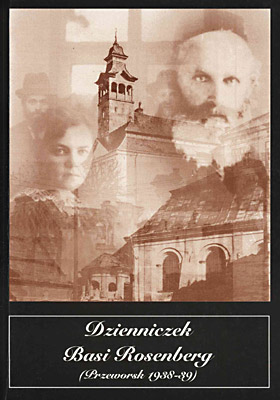
I also brought the "Anne Frank of Przeworsk" Polish diary that I bought in the museum, by Basia Rosenberg, to a Polish friend here in NJ and she's been working on translating it.  I may offer that to the museum; neither Elzbieta nor I want anything for it but to spread this history to wider audiences and set more visitors on my path.

Once I got home, things I found by googling added to what I'd learned and seen.  I found an  amazing postscript to the little "Jewish Cemetery" monument,  its inscription crumbling in a corner of the Przeworsk bus station that covers my ancestor's bones, in a recently published book, "Jewish Spaces in Contemporary Poland," by Erica T. Lehrer and Michael Meng.  Google took me right to most of the relevant pages; I bought the ebook for the rest.

Seems that  in the early eighties, Przeworsk's municipal council decided to build a badly needed bus station on the site of the former Jewish cemetery. A road widening between Rzeszow and Przemysl had already disturbed much of the site. There were no surviving headstones and presumably no visitors.  But the decision to build on the site had one dissenter on the council:  One Jan Sasak.  Outvoted,  he suggested that the town at least erect a monument to mark the spot's former existence.  Again, outvoted. 

But, as history would have it, this Jan Sasak was himself a stonecutter.  So he made the little monument himself, and had it erected in the middle of the station.  Without his knowledge or consent, it was later moved to the back, in a corner on a small bricked rectangle.  Google Streetview still shows it, but only if you know where to look.  And that is why this little monument looks like an unofficial afterthought.  It's certainly unofficial; one man's professional act of righteous, compassionate obstinacy. Does anyone know this man?  Does he still live? Can't find him on Facebook.  I'd certainly like to thank him for this act of historical rescue.

I keep in Facebook touch with Jakub Lysiak, our guide to Przeworsk, Jaroslaw and Przemysl.  He has sent me the info should I want to get more research done on my behalf in the Przemysl archives.  I should follow up on that.  Last I heard he was applying for training as a guide at the Polin Museum in Warsaw.  I'm also Facebook friends with Helise Lieberman, director of the Taube Center for the Renewal of Jewish Life in Poland.  Both their paths cross with Agnieska (Agi) Legutko, a Yiddishist  from Krakow who I met when I booked her for an adult ed presentation at my synagogue in NJ years ago. Today she heads up the Yiddish department at Columbia in NYC.

Then there's the surviving distant relatives newly turned up by Anna Przybyszewska of Warsaw's Jewish Historical Institute; third cousins, perhaps, whose existence is documented by pages of testimony they gave to Yad VaShem in the fifties.  The survivor's name: Chaim / Henryk Schopf, of Tarnow.  Married to a Helena Eisen, with two kids, a Jan and a Ludwig.  His testimony says they made it from the nearby Krakow ghetto to Budapest in 1943, and presumably all made it to Israel.  I have other third cousins in Israel who exchange messages with me all the time; how could they not know of these others in such a small country?  There's a mystery to which I could apply more time and money. 

I would like nothing more than to swim around in these records and mysteries as a full-time occupation.  I have a lot of the language skills and more than passing familiarity with the more popular tools of online genealogical research.  What I have done is given introductory workshops in Ancestry.com to my synagogue, and, with my Lifelong Learning cochair, gotten a wall-sized map of eastern and central Europe printed on sturdy vinyl and hung in the social hall. The idea is to encourage others to research and mark their ancestral towns within its borders.  (We've added inserts of Israel, Iraq, Spain and Sudan for our few Sephardi members.  And Italy for inter-marrieds.) We've just gotten started.

Then there's Poland, a place the grandmother I knew certainly didn't care about, and who could blame her.  I follow its politics a little now.  The news is not good; fear of Muslim refugee hordes, among other factors, has turned voters sharply to the right, and what has made the news but a photo of the archetypical Polish antiSemite of my grandmother's nightmares, holding a bottle, in a group burning an effigy of a Hasid holding the European Union flag. What is that about?  Is that a safer stand-in for a  Muslim effigy, which would also be repulsive but at least more relevant?  Is it cowardice, a drunken  fringe element, or just the most virulent outbreak of an incurable xenophobia, expressed against the most traditional, vulnerable  Other? 

You beautiful young people I saw sipping wine and beer on the Rynek of Rzeszow, the college town, speaking other languages:  You folks who gave me the Jewish History tour map of Tarnow: Jakub: Did you go to the polls?  Did you sit this one out? Or were you simply outnumbered. And by whom.


The "renascent" Jewish community of Poland is miniscule; somewhere between 10,000 and 20,000.  I can't see that number ever approaching even five percent of its pre-war population, which would get to 150,000.  But we could become more frequent and interested visitors. Even if somewhat transient,  the community could grow. Jewish Studies is apparently popular at Warsaw University, among Catholic-born Poles. Here's hoping that with the churn of Polish generations, we will see even wider acknowledgement and acceptance of our historical relationship.   

Wednesday, November 4, 2015

Roots Tour, Part XI, Leaving Grandma's Galician Poland, coming to Warsaw


 It's now five months since we made my roots trip to Galician Poland; I must finish my account before I have to rely entirely on photos and notes.

Still in Tarnow that Wednesday, we found a sign that said Rzeszow, near where we'd parked the car. So instead of retracing our route, we followed its arrow,  driving east on a smaller road  parallel to the A4 highway we'd come on. With the sun setting behind us, the hills brightly lit green, we passed Dembica, the ancestral home of the Jewish half of the family of my friend Pat, who grew up on Long Island.


Old Rzeszow hands by now, we made no wrong turns, pulling into the Hotel Bristol's underground garage just as night fell. We took a last walk around Rzeszow's cobbled rynek, full of echoing chatter from around the outdoor restaurant tables. In the tourist office, under the rynek one floor below ground level, a roomful of townspeople were taking dance lessons. I asked a young woman who was also watching the class from above if she spoke English and if she was local.  She did speak English but she was from Warsaw, here on business.  I explained that I was visiting my grandmother's ancestral area and she said that yes, many people from America were visiting now.  She didn't say Jews, but I'm sure that's what she meant.

On the other hand, when the tourist office had been open to the public during the day, and someone who was obviously a working student was behind the counter, I casually mentioned that we were particularly interested in remnants of Jewish presence, and it didn't elicit any unease at all. She told me about Jewish lectures and events in Rzeszow that we could no longer attend; our regular guided tour was starting in Warsaw the following evening. (Rzeszow's underground tourism office was also the entry point to the town's historic underground storerooms, which tunneled together, far around under the plaza. Had we had more time...)

The next morning, we drove our rental car with the schizo GPS to the airport, stopping at a gas station to top up en route, just like we do in Florida.  We couldn't figure out how to open the gas cap, and neither could the nice young man who worked there.  An anxious, wordless comedy ensued, with us searching the dashboard and the floor around the driver's seat while the time cushion before our flight ran out.  Finally, he motioned for our key; it was remote controlled. An age, not a language gap.


We thanked him, parked the car in front of Rzeszow's airport, dropped the keys at the counter, and  hopped the ridiculously cheap flight to Warsaw. We were probably the only foreigners in that little plane, flying over the green-blanketed landscape with the houses nestled in the creases.

Warsaw's Chopin Airport looked new and world-class. It was also cosmopolitan enough for a Chasid to walk through without looking particularly self-conscious, if they ever do. We hopped a cab to the Radisson, where our guided tour would begin at a welcome dinner.  After leaving our bags with the concierge -- it was still only late morning --  our first destination was the Emanuel Ringelblum Jewish Historical Institute, to meet Anna Przybyszewska, the researcher I'd met over the web, the one who'd helped me discover some new surviving distant relatives.

We were half an hour late, we thought, but we'd sent a message through to her that we would be.  We strode off from the hotel briskly, passing a synagogue and through a courtyard with Yiddish written on the exterior walls.  My husband had picked this direction, so I was pretty irritated with him 15 minutes later when we figured out we'd struck out in the wrong direction. We had to retrace our steps and be even later; by the time I got to the JHI, I was pretty flushed and edgy. 

Anna's office was shared with two others in a library room just off the main floor lobby of this historically Jewish, rare surviving building.  We walked in and introduced ourselves, and it turned out she'd been expecting us hours before.  A pale, slender woman, perhaps 50, with straight light hair that framed her face.  A delicate librarian look, but a piercing gaze.

 I really didn't have anything prepared to say or work on; the moment was too fraught, somehow. And anything on a screen can be done long-distance.  But my husband started talking with her at length, making me more edgy still.  Finally I blurted out, "Are you going to take all my time with her, too?"

Anna was a little appalled at this outburst. She looked at me rather sternly.  "These stories are important," she said.  "We have to hear this, too." I don't remember what the subject of their conversation had been, exactly; I just felt ashamed.  And by this Polish researcher, who had made it her mission to gather every possible detail about my murdered people.

Obviously, this work could have occupied far more people. It looked pretty wearing on her, and was not about catering to the impatience of any particular Jewish visitor, even if that impatience had 
been directed at a husband, and not at her.

We didn't make much more of the visit.  I had basically just wanted to say hello, and find out what would be involved in trying to track down distant relatives in Israel, the last evidence for which dated to the fifties. She quickly brought up our email correspondence and all the other material relating to my relatives that she had sent me.

The only other thing I remember her saying was that one had to be careful in teaching kids about the Holocaust, and not to overwhelm them with too much information at once; it could cause psychological harm.  It had to be appropriate to one's age and resistance to despair.  We left and another couple took our place.  Other people were sitting with her Israeli assistant, and the third worker.  Each specialized in different languages relevant to the documents they retrieved, were brought, and searched through.

My husband went to look over the historical exhibits on the upper floors, which dealt with the surviving ten percent of Polish Jews; the attempts at resettling and restoring the mental health of traumatized orphans (many understandably wanted absolutely no part of being Jewish), the role of surviving and survivor Jewish organizations. 


While he did that I went next door to visit Helise Lieberman, the executive director of the foundation for Jewish Life in Poland.   Helise for 20 years has been nourishing the seedlings of Jewish community in Poland with her energy, humanism, positivity and humor.  We too had been corresponding for months before my trip. She gave me a hug and she updated me on the people we had had in common; some dating to 1970, others, Yiddishists in 2015. 

Helise has represented the vestigial and replanted Jewish community to Polish prime ministers and visiting Americans for years now. She can be seen at all commemorative and holiday events, and was among those getting the enormous Polin museum project off the ground over the past decade.


Sunday, September 20, 2015

Tarnow, Part 2, Roots Tour, Part X

We would have liked to have met up with other Jews and Jew-lovers at the concert at the Bima in Tarnow that evening; we could have shared both the ghosts and living presence.  But my husband wasn't inclined to drive in a strange country with a schizo GPS in the dark.  So instead, we proceeded along the proscribed Jewish heritage path on the map given us at the information centre on the rynek, to leave before nightfall.  This led us to the remnant of the city walls, which we could stand upon.  And past that, to a monument to the first Transport to Auschwitz. 

This tells the story of the first transport to Auschwitz;
it came from Tarnow and it was 738 political prisoners.
Monument to first transport to Auschwitz, Tarnow
There were posters to this fact plastered around Tarnow's rynek; the first transport to Auschwitz was not a Jewish one. This transport was of 708 non-Jewish Poles and 20 Jews; they were sent in June 1940 as political prisoners, and the square from which they were taken was marked with a modernistic, minimalist art work.  The wide marble panel represented outlines of people rounded up from everyday worklives, holding briefcases, led by outlined soldiers in identifiably German helmets, jodhpur pants, with rifles slung over their shoulders. A couple of police were stationed there; a Polish flag waved on its pole. 
The former mikveh of Tarnow.  It must have been beautiful once.
Opposite this monument was a building with perhaps Persian-style keyhole windows and ornamentation; it had been the local mikveh.  Now it housed a restaurant, a salon and some other offices. Air conditioning units poked through the keyhole windows, indifferent to restoration.


Further along the route we came upon three posted sheets with the timeline of the destruction of Tarnow's Jews -- half of the population, or around 25,000 people.  Unlike something you'd read in America, this plaque showed the difference made by local familiarity; it named the who, what, where and when of each Aktion, day by day.  It named names, dates, times of day. 

This "Chronology of Tragedy" noted that the Germans first bombed Tarnow on Sept. 3, 1939 and took over the city five days later. They immediately started capturing Jewish men on the streets, confiscating their property and sending them off to forced labor camps. In November of that year the synagogues were torched.  The first 1940 transport of political prisoners to Auschwitz were tatooed with the numbers 31 to 758.

The Tarnow ghetto was formally established in March 1941; it was eventually stuffed with 40,000 Jews from the city and surrounding towns.  The first Aktion was in June, ordered by Obergruppenfuhrer F.W. Kruger.   Paul Reiss, head of Tarnow's Judenrat, was shot and killed on the spot when he refused to hand over lists of Jews marked for transport.

 "Due to the enormous task pose by the first Aktion, the security services sought assistance from the local and district police, a company of Waffen SS, headed by SS Hauptsturmfuhrer Klienow, stationed at Debica training Camp, the Sonderdienst (Special Services), the Baudienst (Polish Pioneer Service), and several employees of the Tarnow Labor Exchange."  My friend Pat's grandparents were from Debica, which we passed on our way back to Rzeszow.

"On the morning of June 11, after a speech by Klee, commander of the criminal police, the SS men were issued rations of alcohol and they and the Baudienst, armed with axes, broke down the locked doors of the Jewish houses."  The description that followed, of this and three or four more Aktions,  were obviously eye-witness accounts of mass murder and deportation to the Belzec death camp.  The final liquidation of the Ghetto was the work of Amnon Goth, who had proven his capacity for brutality in the ghettos of Krakow, Przemysl, Rzeszow, Lublin, and other towns. He was played by Ralph Fiennes in Schindler's List.

This Chronology of Tragedy was posted on that wall only in English; so for the benefit of Jewish tourists. Would the Polish version have remained unmolested on that wall? 

Krakowska Street, leading to Tarnow's Rynek
On our way back to the car we walked down Krakowska, looking for the address of my grandmother's cousin Chaim's tailor shop.  49 and 53 looked original, but 51 was obviously a post-war building.  We found another historical plaque on 53, with pictures of the occupation 1939-45.  We also had dinner in a very nice place called Tatrzanska. And we passed a huge red brick church, rose petals strewn all over the sidewalk in front.  A banner on one side of the door featured Jesus; on the other, Pope John Paul. Children stood near a side entrance in First Communion robes, a costume I recognized from Catholic Queens.  We also passed a large billboard, also featuring the Polish Pope, urging the congregation to take part in an upcoming group trip to the Holy Land.

Tarnow is named after this guy, I think.
I used to know more about him. Nobility?
We found a sign that said "Rzeszow" pointing out of the city, so we took the long way home, on a lesser road, as the sun set. Found our way into the hotel basement parking, from behind the rynek.

Friday, August 28, 2015

Roots Tour Part IX; In which we drive ourselves to Tarnow and meet the last Jew born there. Or so he said.

Jakub drove us home from Sanok in the Carpathians; it was dark by the time we made it back to Rzeszow's rynek.  We found an ATM to get the additional zlotys needed to pay him for a long, full, memorable day.  He promised to send us the pictures he'd taken and see about forms for further research in Przemysl's regional archives.  He also came up, at our invitation, to check out the hotel for other clients.  I asked him if the glass-walled bathroom was something Polish, or merely weird.

He said it was weird. We're Facebook friends now and I'm following his career; a NY Times writer of 30 years recently wrote in the Sunday Magazine about his roots tour into Poland and Ukraine, with the "resourceful" Jakub. (The Jewish reporter also met a lot of the same people we met on our travels.)

After our third night at the Hotel Bristol, on Thursday, we undertook the most adventurous part of our independent journey in Galicia. This involved renting a car and driving it west along A4 to Tarnow ("TARnov"), our biggest Polish town yet. People back home still carry the last name, Tarnower.    

The prospect of driving a car in a foreign country had given my husband pause.  But we had already observed our guide driving; the rules of the road looked the same and the names of towns were easy enough to read on roadsigns. We had maps and we'd already navigated public buses and ticket windows. Besides, I'd already paid for it on the web before we left home. Extra, for automatic transmission.

The only place to pick up a rental car in Rzeszow seemed to be back north at the airport, so the hotel got us a cab; the driver spoke no English at all. The man at the airport car rental counter spoke it fluently, though. In a gesture of extra hospitality, he threw in an English-speaking GPS system at no extra charge.  This completely changed my husband's attitude; we were as good as guided.

Except that the GPS' directions made no sense. We knew that all we needed was to get on progressively bigger west-bound roads till we got on the major highway to Tarnow. But the GPS didn't, somehow.  Its British voice was taking us to progressively smaller, more local roads, and we were not, as far as we could tell, facing west, but east. Every time we did face west, it told us to turn around.

Then we learned that the disadvantage of driving in a country where you don't speak the language; you can't understand such warnings as "road under construction, keep left." So we wound up following another presumed tourist right up to the navigable end of some right lanes. This forced us to turn around and drive in the direction of oncoming traffic, until we could quickly turn sharply around into the lanes we would have known to follow had we been Polish speakers.  


We wound up lost in a residential neighborhood, with no sign of the highway, cursing the complimentary schizoid navigator. Luckily, the residential neighborhood in which we gave up on the GPS had a corner deli, where nobody spoke English but someone remembered the same amount of high school French as I did.  A couple a droits, a couple a gauches, and we were on the main road to Tarnow.

We drove into town -- following signs for the old city -- the stare miasto -- and parked right off Krakowskiej street -- the same street where my grandmother's cousin Chaim had had a tailor shop, at number 51.  We lucked out yet again when a meter cop, using Polish and smiling pantomime, helped us figure out one of those newfangled parking machines, the same kind that confuses us in New York.  Did he recognize our purpose?  Did he recognize American Jews?

Tarnow had had a big Jewish community, and its current city fathers seemed to know it.  We soon came upon a poster on the way into the old part of town that advertised a week of Jewish culture.  Lectures, movies, concerts, sing-alongs.  The poster was all in Polish, so this was not just for my eyes, but natives'.  The information center on its rynek was well prepared for Jewish roots seekers, too, with a separate self-guided Jewish heritage tour map and experienced, bilingual help. 


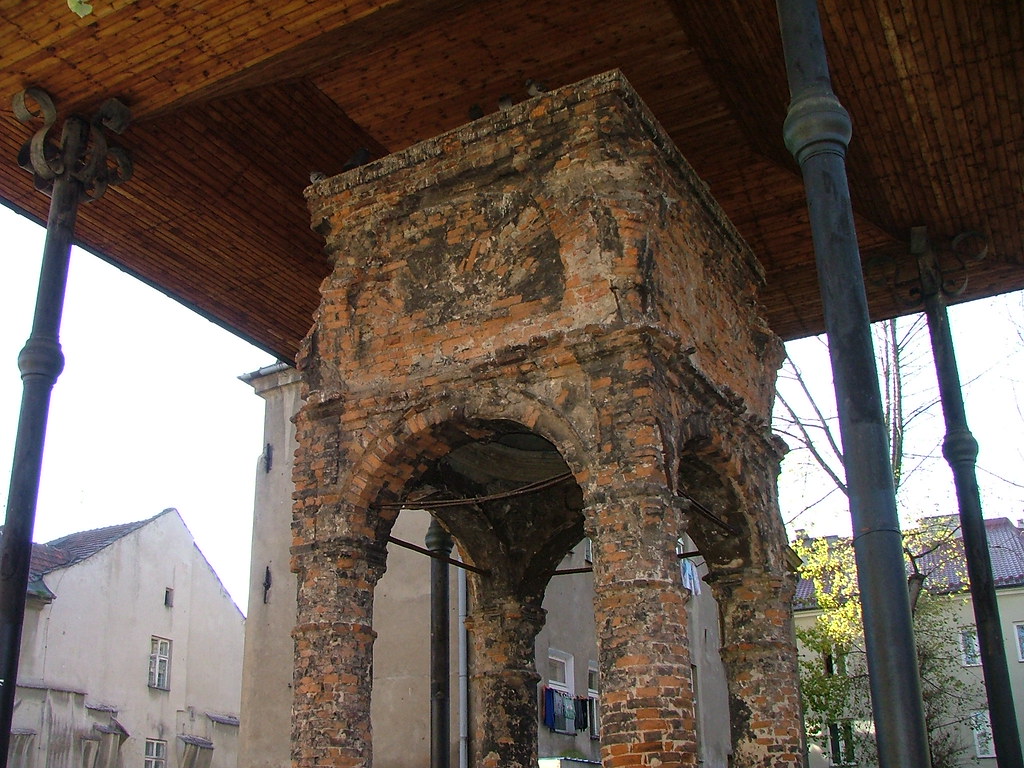
The first place on that tour was the Bima -- the surviving piece  of a 17th-century synagogue the Nazis had burnt down.  Its four pillars, skinned to its bricks, and the dome above them stood in a pocket park dedicated to this ruin. Remnants of painted wood were visible inside the dome, and on a brick wall opposite this bima were panels, in English and Polish, describing the lost world of Tarnow's Jews. 


On the cement wall of the side of a building behind the bima, some young people were painting a mural of doves.  These may have been from the storefront just across from the park entrance, the local headquarters of a Polish organization dedicated to restoring local Jewish spaces.  The organization's name was written in Yiddish letters, transliterated from Polish, over the door.


Then three English-speaking people appeared; one fifty- or sixtyish man in a Tevye-style cap, his slightly younger wife, and a fit grey-haired man dressed in artsy black, carrying professional-weight cameras.  Jews!  Tevye/Jerry was from Vancouver and had come for the annual bike ride from Auschwitz to Krakow. The camera carrier was indeed a professional photographer, a Jerry/Jerzy? Bergman, and "the last Jew born in Tarnow."  In 1948, to parents from among the surviving ten percent -- before they, too, left for more receptive places. 

Jerry Bergman had grown up and gone to school among Poles, who were apparently none too happy to have him in their midst.  He could point out his grandfather's ironwork shop off the rynek, and other personal and public landmarks of Tarnow's Jewish history.  He'd taken pictures for all kinds of international media outlets and currently lived in Denmark, but came back to Tarnow for Jewish events; he has a standing reservation for a room over the Tourism Information Center for whenever he comes.

We immediately fell to easy joking, as if we'd been friends for weeks, at least.  That traveling- incognito feeling, though it had faded over the past three days, disappeared in the company of these other Jews.  The four of us followed Jerry around through the rynek to a few blocks of Tarnow, him pointing out exactly where the Jewish streets began and ended, the rising value of property, the present owners and their trouble funding renovation, where his relatives had lived and other historical insider tidbits.  

Although Jerry Bergman spoke and gestured in a tone of understandable cynicism, he was actually quite active in the preservation and restoration of Jewish artifacts and in particular, cemeteries.  He explained how the Jewish cemeteries we'd seen had no stones because if they hadn't been destroyed and pillaged by Nazis, they'd become defenseless quarries for the local population, who helped themselves later.  Many photos of Jewish gravestones, in abandoned cemeteries or abandoned in fields, appear among his online photographs. Many wound up sanded down, re-engraved, and repurposed in Christian graveyards.


While he showed a typically Jewish, rueful sense of humor, Jerry  didn't broadcast any malice toward contemporary Poles. He seemed pleased by local efforts of organizations like AntiSchematy2 and Mezuza to restore local Jewish cemeteries. He was certainly not traveling incognito. He said he hoped we'd come to the concert at the bimah that night, and went off to his place in town to get some sleep.


Thursday, August 13, 2015

Roots Tour Part VIII: From Przework east to towns she knew -- Jaroslaw and Przemysl


Feeling victorious after our historian produced the census records from a room right behind her office, we left the Przeworsk museum for the next town, about 15 minutes east: Jaroslaw.  It was a place my grandmother had mentioned. A quick hop by car train or horse, I think the doctor had been there.  An attractive little town, it had its own rynek, of course, and two repurposed synagogues still standing.

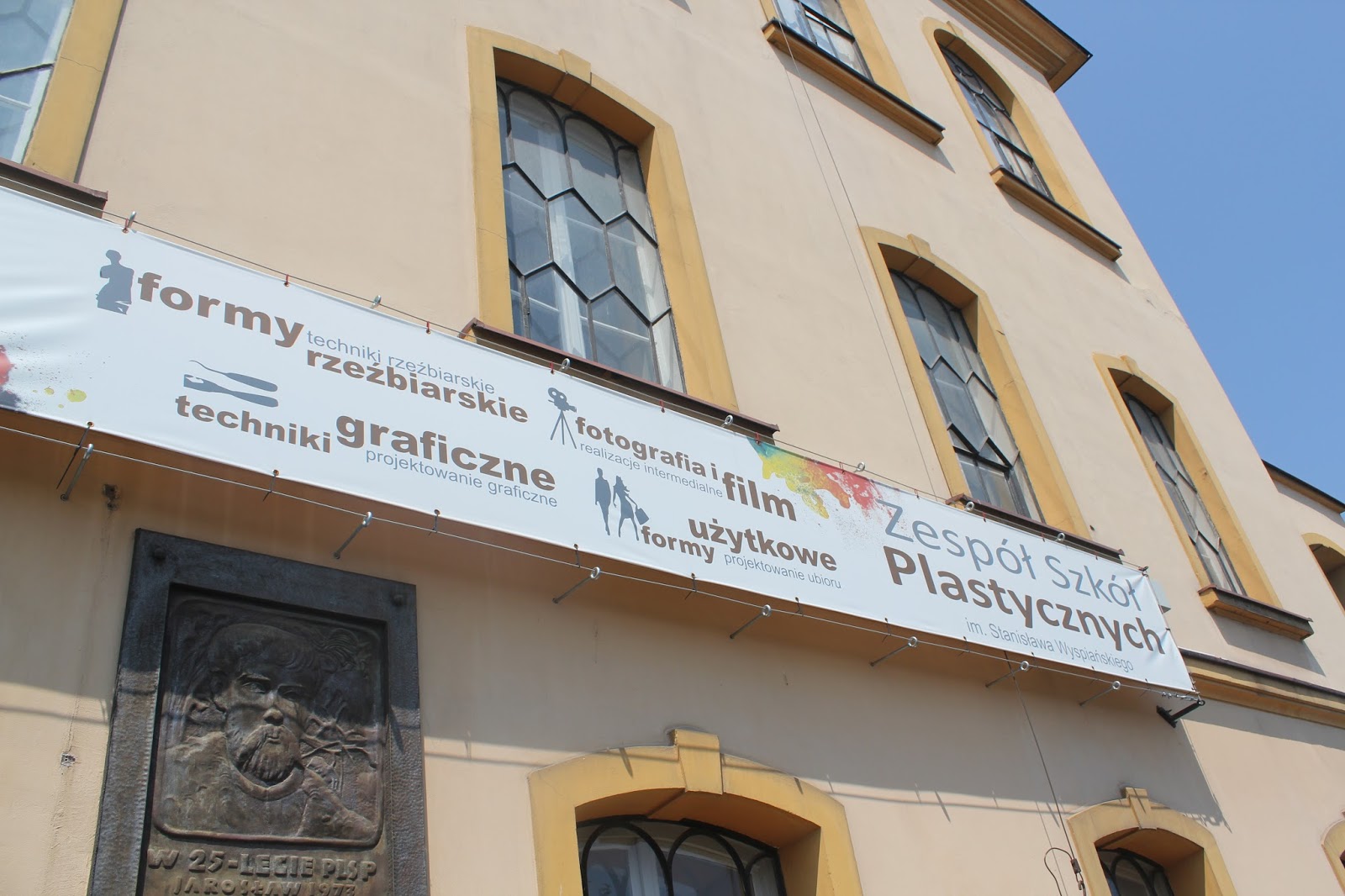
The plaque on the art school in Jaroslaw
Jakub took us inside one of them; it's been an art school for many years.  You can't tell it was a synagogue until you enter the soaring gallery of students' drawings and paintings. Then you see the high vaulted ceiling and recognize the arched windows, round and rectangular panes of clear glass where you know all the colors and the names of donors once drew the eyes of daveners. 


There's two plaques to bear witness; one of recent vintage, in Polish English and Hebrew, and an older one, in Polish alone.

 The school is on or very near Jaroslav's rynek, which also boasts a beautiful town hall, decked with plaques and statuary.


The other synagogue, the "new" one, is not being used for anything  now. Jakub said it was under new ownership.  This one had one extremely exceptional feature: the shape of the twin tablets on its pediment; a clear surviving sign of its original identity. Everywhere else we'd been so far, the Germans had been diabolically thorough about eradicating all signs of Jewish names or symbols.

Inside, the art school shows hints of its previous function.


Anyone speak Polish?  This appears on the town hall  in Jaroslaw's rynek. 


This is the former synagogue in Jaroslaw  that bears a rare surviving symbol.
We had lunch in Jaroslaw and proceeded on further east to Przemysl, a place my Grandmother refers to on a recording as a place "we knew we were already safe."  A small hilly city of three-story, ornately fronted buildings, winding streets and plenty of vehicular ad pedestrian traffic.  There we had an address from a document of the Committee for Polish Jews placing my grandmother's surviving nephew, age 2, and his mother, her sister-in-law, in 1946.

This multilingual sign describing Jaroslaw's history as a trade center typifies the Jew-free history taught all through the Communist era.  


Yes, that's a covered wagon, representing Jaroslaw's past to tourists
 as a way station among traders.  I thought those belonged to American history...  who knew? 


My husband and Jakub, chatting in Jaroslaw

On our way to that address, a mid-sixtyish local woman saw us on the sidewalk and me with my camera. Happy to see her town worthy of tourism, she eagerly asked me, through Jakub, what I thought of Przemysl. I said it looked like a nice, prosperous European city.   Along with translating my answer, Jakub asked her for directions to Przemysl's synagogues.  Although I didn't catch it, he told me that he saw her enthusiasm immediately cool. But she gave us the right directions.

Przemysl's synagogue was a big building in the middle of town; it had served first as a stable and later as a library.  Same denatured windows.  Blank old plaques where names had once been inscribed.  New historical plaques with contemporary donors.

The names erased from a place of honor
on the former synagogue of Przemysl.
The symbols chiseled off, the synagogue turned stable in Przemysl.
We left the shul and walked back the way we'd come, to find my great aunt's and second cousin's address; Mikiewicza 7.  It led to an old wooden door inside a courtyard, behind retail stores of leather goods and meat. Not neat or pretty. Weather-beaten and shabby, the door shared the courtyard with garbage bins and parked motorcycles.  People of the neighborhood asked us what we were doing there. I managed "aunt" and gestured "long, long ago."  That seemed to satisfy them.

Przemysl also has a surviving Jewish cemetery, which we visited inside its walls. With burials that dated up to 1944, its grounds near the entrance were obviously kept by someone who cared in 2015.

How was this graveyard spared? Jakub said that the Germans just couldn't manage to get to every one. They got close. The woods and underbrush were reclaiming the older stones, further back from the entrance and the road.

Two plaques adorned the entrance arch: one in Polish dedicated to a John J Hartman from the USA in 1999; the one on the other side in Hebrew and Polish to an Aharon (Arnold) Rabinowicz, who, says Google Translate,  built this wall and its iron gate in the year 1913.


Jakub had one more place he wanted to show us; something that would give us a sense, he said, of old Galicia. After at least an hour's drive through gentle Carpathian hills, that place turned out to be the curated historical village of Sanok.

 Something like Stockbridge, Mass., with admission building, tickets, map, it was assembled out of actual 19th-century, thatched-roof wooden houses and businesses salvaged from other towns around southern Poland,  mostly arranged around  a market square.  And just like a Stockbridge or a Waterloo, NJ, it had its blacksmith, apothecary, clockmaker, schoolhouse, church, weaver, tinker and teacher.

And less like a Stockbridge, it had its Jews. One Jewish house stood on the square, its front-room table set for Shabbes and papercut pictures hanging in the windows.

There was also a well-researched synagogue going up in Sanok this year,  reflecting the new tourism traffic and Jewish historical agencies at work in today's Poland.

We'd unfortunately gotten there at the end of the day. They let us in, just in time to see the watchmaker close up shop and a straggling school group get a double-speed, last-minute tour from a man who looked authentic to the place and period.  The kids looked like they could easily be from central New Jersey; that's  central and eastern Europe for you.

Finally, we and Jakub had dinner on the rynek in Sanok, after he showed us the surviving "private" synagogue of that little town.  You don't expect a Jewish presence in remote little towns in America, but there are ghosts of them in tiny towns all over Poland.  There's a historical reason for this; I think it's that Polish nobles wanted "their" administrative Jews everywhere to collect taxes for them.  Strategic to pick an unpopular minority that relied on the nobility for protection. 

Right next to our outdoor table was a coin-operated, one-seat kiddie ride; the kind of thing you'd see outside stores in my boomer childhood.  A little boy got in it, right next to his mom, and my husband offered the mom to do the shaking for him, Which he did, making the boy laugh.

The young mom spoke a little English. The little boy's name?  "Yosh."  What does he speak?  "He speaks Yosh."  We shared a little moment of the everyday sweet silliness of being a little kid's mom.


Thursday, July 23, 2015

Roots Tour in Galicia, Part VII: In which we find the one person in Przeworsk who could find a piece of proof


The three of us, led by Jakub, went into Przeworsk's Ratusz/town hall to look for records, as municipalities are supposed to hold those that are  less than one hundred years old. Older than that, and they go into regional Polish archives in bigger cities; in Przeworsk's case, Przemysl. 

The entrance to the Ratusz was now in the back, in a new addition whose construction was photographed the day Google came by in 2013.


Now it was finished and little kids played by the fountain.


We came to an office occupied by two women in their sixties; John Paul II's picture was on the wall.  Jakub explained the reason for our visit and they explained back, through him, that they couldn't help us; only marriage records were kept there.  We wanted another municipal office, they said; the one by the elephants. 

Elephants?  Were they pulling our leg?  We walked to Jakub's car, looking for elephants on signs or in store windows, then went a few blocks west on E40 until we came upon a pair of elephants on the road's grassy median. They were topiaries.  Cute green elephants, made of hedges, with red carpet saddles. And across the street from them was another office building, at the end of a flowery walkway, showing  Przework's by now familiar coat of arms, with the star and crescent.


Actually, I think there's something between Poles and elephants. They're a motif I saw painted on baroque  buildings in Tarnow and elsewhere.

Anyway, we entered this municipal building, whose halls looked just like town halls anywhere, with signs boosting  Przeworsk and everything that happens there, culturally, athletically, educationally, commercially.  We were directed up the stairs to another, smaller office, where two younger women, sitting at keyboards, also listened to our quest via Jakub. 
 
They were very sorry, but Przeworsk was no longer holding any town records; everything, recent to ancient, was now stored in Przemysl. Disappointing, but Przemysl was on our itinerary that day, anyway.  I saw a map of Przeworsk on the wall, the kind framed with squares of local advertising, and asked them if they had any more copies.  They apologized again.  We thanked them and went back down the stairs. 

Before we reached the first floor, the women called down after us and gave us the map from the wall, rolled up; a consolation prize.  I now have a nice map of Przeworsk and immediate vicinity, with the ads of many local businesses, mostly in home improvement, all around it.

Suzanne Wertheim's web page on Przeworsk had mentioned a local teacher, a Mr. Thomas, who had helped her identify old sites from pictures.  Jakub thought of inquiring in Przeworsk's public  library -- also conveniently located near the elephants.  I sat down at a PC and launched the familiar refrain of a Windows boot-up while he went to  ask the local librarians if they knew of this teacher.  Again, no luck.  And not much English, not even from the young civil servants. Sympathetic  smiles, at least. And Windows, in Polish.

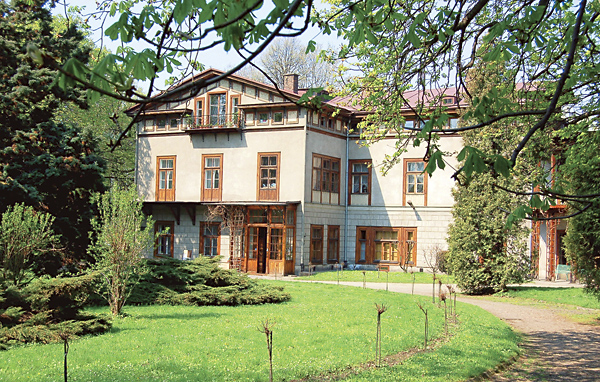
We were about to set out for Przemysl, the town after Jaroslaw, when I remembered that I'd seen a Przeworsk museum on the web.  That too, was nearby, in a park that had been another Lubomirski estate.   The museum itself looked like an old elegant country house.

I wasn't sure why I thought of the museum; I wasn't much interested in the case of surviving Judaica mentioned on their site; I know what menorahs and tefillin look like. Nor did we want to see any more aristocratic interiors, or the historical  firefighting exhibit. Again, another entrance, another explanation in the native language. 

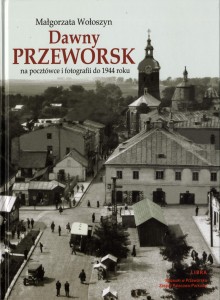
But this time we stirred up some enthusiasm.  Wait, let us get the local historian, they said. Turns out she worked upstairs.  Here, look at these books, in this case.  Here's a book of photos on the history of Przeworsk with a lot on the Jewish community, edited by this same historian. 

Here's another book; a diary, by the Anne Frank of Przeworsk, one Basia Rosenberg.  Well of course I bought that, and for only 8 zlotys.  Yes, it's in Polish.  I'm working on it. 

I would have been delighted to buy the book of photos, too, if that hadn't been their last copy. One of only 1000 or so printed,  it was out of print.  I'll be looking for it on Polish ebay.  We were ushered up the stairs to meet the historian, a woman somewhere near 40, I think, by the name of Malgorzata  (Margaret) Woloszyn.  She and a colleague were working on computers  in a cramped paneled room, and when we greeted her and explained our mission, she went into a back room and came back barely minutes later with some 95--to-100-year-old books of handwritten census records.

One book was an index to the others. And there, in those old lined but still sturdy pages, Margaret turned the pages to Schopfs and Schillers.  Including my grandmother, and her sisters, and brothers, and many cousins I never knew about, their birth dates, names and relation to their households, and the occupations of the head of the household, which was Krawic, or kravitz. This means tailor, which matched what I already knew.


We were all very happy, finder, researcher, interpreter/guide and husband. Here was proof, still in Przeworsk, that my grandmother, and therefore I and my family, had some connection to this town. 
 I asked her if she got visits like this much, from roots seekers, and she said that yes, she gets a few every year.

I was so excited that I took a lot of blurry pictures of the pages, and accidentally used the flash twice in spite of promising not to.  Some are sharp.  At least one page I'd like to ask her to reshoot and send me.

And I can, because I asked for her email address and she gave it to me.  I gave her my card and she stapled it into some kind of guest register.   And as soon as I finish this series -- or maybe even this post -- I'm going to write her, and Google Translate will do the rest.


The fact is that millions of birth, death, military and marriage records of Polish Jews are now searchable on the web.  I've found many and expect to find more. The Mormons gave Poland lots of money and resources to digitize all these records, in their dubious but indirectly useful effort to posthumously baptize everyone who ever lived.  So it doesn't really pay to spend too much of a short in-person visit in dusty archives.  Ms. Woloszyn herself said that these census books were going to be digitized as well. But there's still a satisfaction in seeing and smelling pages in ink and paper, in a tangible ledger, in seeing the names in that elegant turn-of-the-century penmanship. In being in the same general place where they were written, so long ago.

Now here's a really strange thing: The historian's last name, Woloszyn, is the last name of some of my husband's cousins. Bruce Wolosin, his third cousin originally from Cleveland, today lives in the same town we do and he and his wife are active members of my synagogue. Volozhin is a town once famous for its rabbinic learning. 

I'm sure this helpful historian isn't Jewish.   Jesus' picture hangs on her office wall, too.  But maybe, if you do some research...